Wind Shift’s Departure: Why We’re Choosing Readiness Over Revenue
In April, Wind Shift departs Australia to begin a multi-year circumnavigation. In the lead-up, Sail Seven Seas is deliberately limiting voyages to prioritise long-range readiness over short-term revenue. This post explains the thinking behind that decision, the transition from charter mode to expedition mode, and the significance of the final Australian coastal passage.
Matt Harvey
2/1/20262 min read
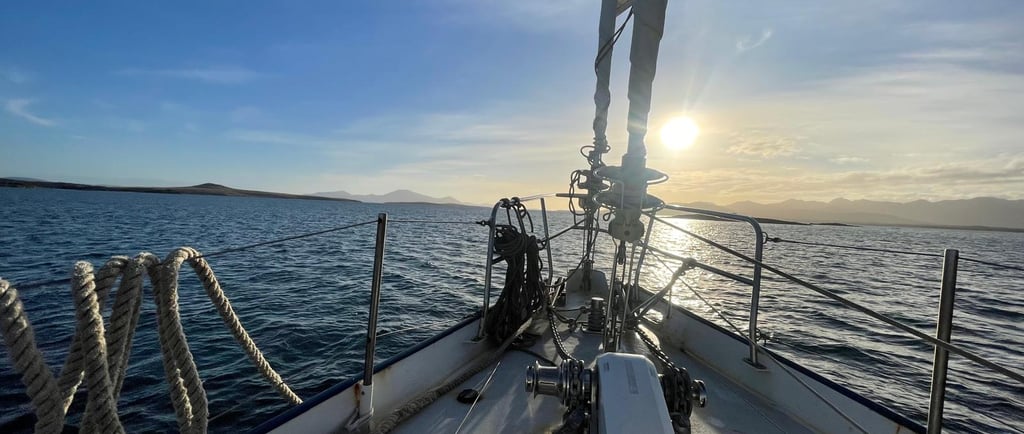
In April, Wind Shift departs Australia to begin a multi-year circumnavigation.
She will not return for two to three years.
This is not a seasonal relocation or a repositioning sail. It is the start of a long-range expedition programme, and that distinction matters.
When a vessel leaves its home waters for years at a time, the margin for compromise disappears. Every system, procedure, and decision made beforehand must support long-term reliability offshore, not short-term convenience.
A deliberate change of mode
As we approach departure, Wind Shift is transitioning from charter mode to expedition mode.
That shift means our focus is firmly on:
Safety-critical mechanical, electrical, and systems work
Redundancy, spares, and stowage for remote operations
Watch systems, fatigue management, and crew routines
Locking in configurations that will remain stable offshore
This work takes time, attention, and restraint. It cannot be rushed, and it cannot sit alongside an aggressive sailing schedule.
Why we’re running fewer trips
Between February and departure, we are deliberately limiting voyages.
Any trip we run during this period must meet two tests:
It must meaningfully contribute to expedition readiness, and
It must pay for readiness, not distract from it
If a voyage does not improve systems confidence, crew integration, or operational validation, we do not run it — regardless of potential revenue.
This is not about scarcity or exclusivity.
It is about discipline.
The final Australian coastal passage
Before departure, we will run one final Australian coastal passage in March.
This voyage is not designed as a leisure sail. It is a working coastal passage intended to:
Validate systems under continuous load
Test watchkeeping and fatigue management
Confirm readiness before committing offshore for years
For those onboard, it represents a genuine transition point — the moment Wind Shift moves from Australian coastal sailing into global expedition operations.
What this means for our community
Sailing with us at this stage means:
Fewer trips
Higher intent
Clear, realistic expectations
No brochure promises we can’t keep
This approach reflects how we operate more broadly. We prioritise:
Longevity over volume
Decision quality over momentum
Doing things properly, even when that means saying no
Wind Shift’s departure marks the beginning of the next chapter.
Everything we do before then serves that moment.
👉 If you’re interested in the March voyage, or want to follow the circumnavigation as it unfolds, you can register your interest here.
Join Us In Adventure
Connect
info@sailsevenseas.com
+61 406 708002
© 2025. All rights reserved.